The Mirage of The Majority

Here’s something worth noticing about how people make decisions. When someone has a new idea — a business direction, an investment thesis, a life change they’ve been quietly building conviction around — the first thing most people do isn’t act on it. It’s share it. Not to refine it, and not to stress-test it. But to see if anyone nods.
We call this “getting input.” But most of the time, what we’re actually doing is taking a poll. We want to know if it’s safe to proceed. And if the room doesn’t agree, we quietly let the idea go — as if the crowd were the authority on what’s true, rather than simply a mirror of what feels comfortable to them right now.
I know this pattern well. I’ve lived it.
I’ve done this more than once — and in the places that cost the most.
There was a financial decision I had genuine conviction about. I’d done the thinking. I had specific reasons. But I asked around anyway, and the hesitation of a few people I trusted was enough to make me walk away entirely. The decision I abandoned turned out to be the right one.
There was a life direction I believed in strongly enough to feel it physically. But I submitted it to the same court — friends, people whose opinions I valued — and let their uncertainty become my verdict.
In both cases, I told myself I was being prudent. Stress-testing my thinking. Being humble enough to seek input.
But I wasn’t. I was looking for permission. And when the room didn’t give it, I obeyed — as if the crowd held the answer rather than just reflecting what felt safe to them at the time.
That pattern is what this article is about. And what I’ve had to unlearn since.
When the Smartest Room Got It Backwards
In late 1999, at the height of the dot-com frenzy, Barron’s magazine ran a cover story with a single pointed question: “What’s Wrong, Warren?”
Warren Buffett — by then one of the most proven investors in history — had refused to buy internet stocks. While the Nasdaq was surging and dot-com companies with no revenue were being valued at billions, Buffett stayed out. He called the valuations irrational. He said the fundamentals didn’t support the prices. The crowd, almost unanimously, disagreed.
Barron’s suggested he’d lost his touch. Investors began pulling money from Berkshire Hathaway. His own stock dropped. The consensus had spoken: Buffett was an old man who didn’t understand the new economy.
Less than three months later, the Nasdaq peaked. Then it fell 77%. The companies that the crowd had called visionary were gone. And Berkshire Hathaway — full of boring, unglamorous businesses that nobody wanted during the boom — gained 80% in the years that followed.
The crowd wasn’t lying when they said Buffett was wrong. They genuinely believed it. But they were measuring his ideas against what the room currently found comfortable — not against reality.
That’s the trap. And it’s not unique to markets.
You’re Not Asking for Opinions. You’re Asking for Permission.
To understand why this happens so reliably, you have to understand what’s happening in your brain when you reach for your phone to share a new idea.
Charlie Munger gave the clearest explanation I’ve found. In Poor Charlie’s Almanack, he calls it the “Social Proof Tendency” — our deep, automatic instinct to look at what others are doing before deciding what’s true. He wasn’t describing a character flaw. He was describing something older than that.
On the prehistoric savannah, checking what the tribe thought wasn’t philosophy — it was survival. If everyone ran, you ran. You didn’t stop to reason about the predator. The people who paused to think independently didn’t last long enough to pass on their genes.
We still carry that wiring. When you ask five friends for their take on a new idea, you tell yourself you’re being careful, gathering input, staying humble. But most of the time, you’re doing something much simpler. You’re asking: will I be safe if I do this?
That’s not a search for truth. That’s a search for safety.
And here’s why the crowd will almost always say no to something genuinely new: they’re not judging your idea. They’re protecting what they already know. That’s not malice. That’s just how social systems work. The crowd enforces the average. It has to.
When I finally understood this framing — that I was outsourcing my judgment and calling it humility — it reoriented how I thought about the whole act of seeking validation.
“Right” Depends Entirely on the Room You’re Standing In
There’s a deeper problem underneath the psychology. We treat “right” and “wrong” as universal constants, like gravity. We assume there is a correct answer sitting somewhere, and the majority knows where it is.
But “right” is not a constant. It’s a variable. It depends entirely on when — and who — is doing the labeling.
On September 16, 1992, George Soros bet $10 billion that the British pound was overvalued and would be forced out of the European Exchange Rate Mechanism. The Bank of England was actively defending the currency. Major institutions were aligned against him. The consensus was clear and nearly unanimous: Soros was reckless, even delusional.
By the end of that same day — now known as Black Wednesday — the UK government had surrendered, withdrawn the pound from the ERM, and Soros had made $1 billion in a single afternoon.
The trade didn’t change. His analysis didn’t change. What changed was the outcome — and with it, the label the room assigned to his behavior. The same bet that was “reckless” at 9am was “the greatest currency trade in history” by the following morning.
This is what makes consensus such an unreliable judge: it doesn’t evaluate your reasoning. It evaluates your result — and then retroactively decides whether you were brave or crazy.
This is why Michael Burry’s story is so instructive. In 2005, Burry began telling his investors that the US housing market was going to collapse. He had spent months analyzing mortgage lending data and saw what almost no one else had noticed: millions of subprime loans with adjustable rates that borrowers would soon be unable to afford. He started betting against the housing market using instruments that barely existed yet.
His own investors thought he’d lost his mind. They demanded their money back. The banks he was buying protection from thought he was throwing money away. The consensus — from Wall Street to regulators to the financial press — was that Burry was wrong.
In 2008, the housing market collapsed exactly as he had predicted. Burry made $100 million for himself and over $700 million for his investors.
He wasn’t right because he was smarter than everyone. He was right because he measured his thesis against reality — against lending data, default rates, and loan structures — rather than against what the room currently believed. Everyone else was asking: do people agree with this? Burry was asking: is this true?
Those are not the same question. And in the gap between them, fortunes are made and lost.
Consensus Is an Echo. And Echoes Arrive Late.
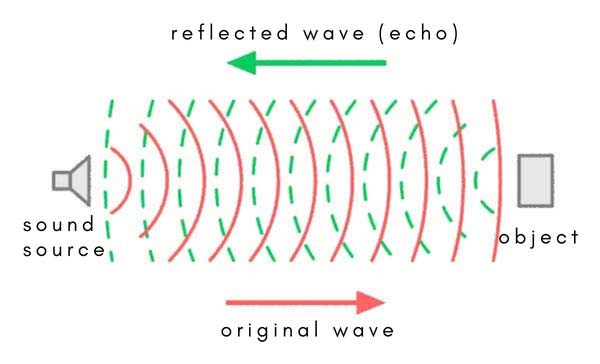
Think about how an echo works. A sound is made. It travels, bounces, and returns. By the time you hear the echo, the original event is already over.
Consensus is the same thing. It’s not a signal about what’s true. It’s a reflection of what already happened — arriving after the fact, confirming what the early movers already knew.
In finance, this has a precise name: a lagging indicator. By the time everyone agrees that a trade is smart, the trade is no longer smart. The price has already moved. The opportunity has been extracted. What’s left is the echo of a decision that someone else made earlier, with less certainty, and more courage.
This is what Buffett understood in 1999 that the crowd didn’t. The dot-com consensus wasn’t a signal that internet stocks were valuable — it was a signal that the opportunity had already been priced in, and then some. The crowd agreeing was precisely the reason to be skeptical, not reassured.
Howard Marks, one of the most respected investors of the past few decades, calls this “second-level thinking.” First-level thinkers ask: is this a good idea? Second-level thinkers ask: what does everyone else think, and am I seeing something they’re not?
The insight isn’t about being contrarian for its own sake. It’s about understanding that consensus reflects what is currently known and accepted — and that truly valuable ideas, almost by definition, live just outside of that.
If you wait for the crowd to tell you you’re right, you have already missed the moment that made being right worth anything.
Who Is Actually Grading the Paper?
We spend our lives terrified of being wrong. But we rarely stop to ask who’s doing the grading.
It feels safer to be wrong with the crowd than to be right alone. If you fail while following everyone else, people say, “Nobody could have seen that coming.” If you fail while standing alone, they say, “I told you so.”
That “I told you so” is what I’ve come to see as the price of thinking for yourself — and looking back, it’s not as high as I once feared.
What I’ve had to learn — slowly, and with some cost — is that the crowd is not a judge. The crowd is an audience. It reflects preferences, comfort levels, and existing beliefs. It does not reflect reality.
Reality is the judge. Time, outcomes, results. These things don’t care about your reputation. They don’t care if your friends thought you were crazy. They only care if you were accurate.
Buffett was “wrong” in 1999 by every social measure available. By 2002, reality had re-issued its verdict.
How to Start Trusting Your Own Thinking — Without Losing Your Mind
This isn’t an argument for arrogance, and it’s not a call to ignore everyone around you. Sometimes the crowd is right. Sometimes your conviction is just stubbornness wearing a confident face. The point was never to be contrarian for its own sake.
The point is simpler than that: make sure you’re measuring your idea against reality, not just against how many people are comfortable with it. Those are two completely different standards — and confusing them is where most bad decisions are born.
The shift, in practice, comes down to asking better questions.
Instead of “Do you agree with me?” — ask “What specific facts would make this fail?”
The first question is a headcount. The second is a stress test. They feel similar, but they produce completely different conversations. One tells you how safe your idea is. The other tells you whether it’s true.
The next time you feel the urge to share a new idea before you’ve fully formed it — pause. Ask yourself honestly: am I looking for truth right now, or am I looking for permission?
Most of the time, you already know the answer.
Four Questions to Ask Before You Poll the Room
Before polling the room on your next big idea, run through this:
- Am I asking for truth or safety? Be honest. If you’re looking for reassurance, name it — and then decide if that’s actually what you need.
- Is this the right room? Are the people I’m asking equipped to evaluate this — or are they just the most available?
- What specific facts would change my mind? If the answer is “nothing,” you don’t need their opinion. You need more data.
- Am I stress-testing the idea or the audience? Good feedback challenges your reasoning. Validation-seeking tests how comfortable others are with change.
The amateur wants to feel right. The professional wants to be right.
The difference is who they ask — and what they do when the answer comes back wrong.